Click on the image to enlarge it.
MAURITANIA
A great exploratory expedition through Mauritania, an itinerary that is the result of many years of research in this part of the Sahara. The journey begins in Nouakchott, the capital, and soon we will travel along the main road through spectacular dune ranges…
DEPARTURES:
31 October 2026
23 January 2027
30 October 2027
You can book online up to 30 days before departure.
For bookings within 30 days of your departure date, please contact our team: transafrica@transafrica.biz
MAURITANIA
COMFORT IS A MAIN CONDITION TO FULLY ENJOY AN EXPLORATORY EXPEDITION:
ALL OUR BIVOUACS WILL BE IN CONVENIENT MORISH TENTS, WITH PORTABLE BEDS, MATTRESSES, CHAIRS AND MATS. A RESTAURANT TENT WILL BE SET UP IN CASE OF WIND.
THE EXPLORATION: Beyond the horizon the Erg Ouarane, more than 500 miles of uninterrupted virgin sand and ranges of dunes. We will cross the unknown. The only human traces we will be able to find in the coming days will be prehistoric stone tools, silent testimonies of people who lived three thousand years ago. A unique experience in the immensity. For days our direction will be decided only by the experience of our guides and the points of the GPS.
In addition to this extreme exploration we will not give up visiting the classic musts of Mauritania: villages and mountains of’ Adrar, the stone oases of Chinguetti and Ouadane and the mysterious Guelb Es Richat called the eye of’ Africa.
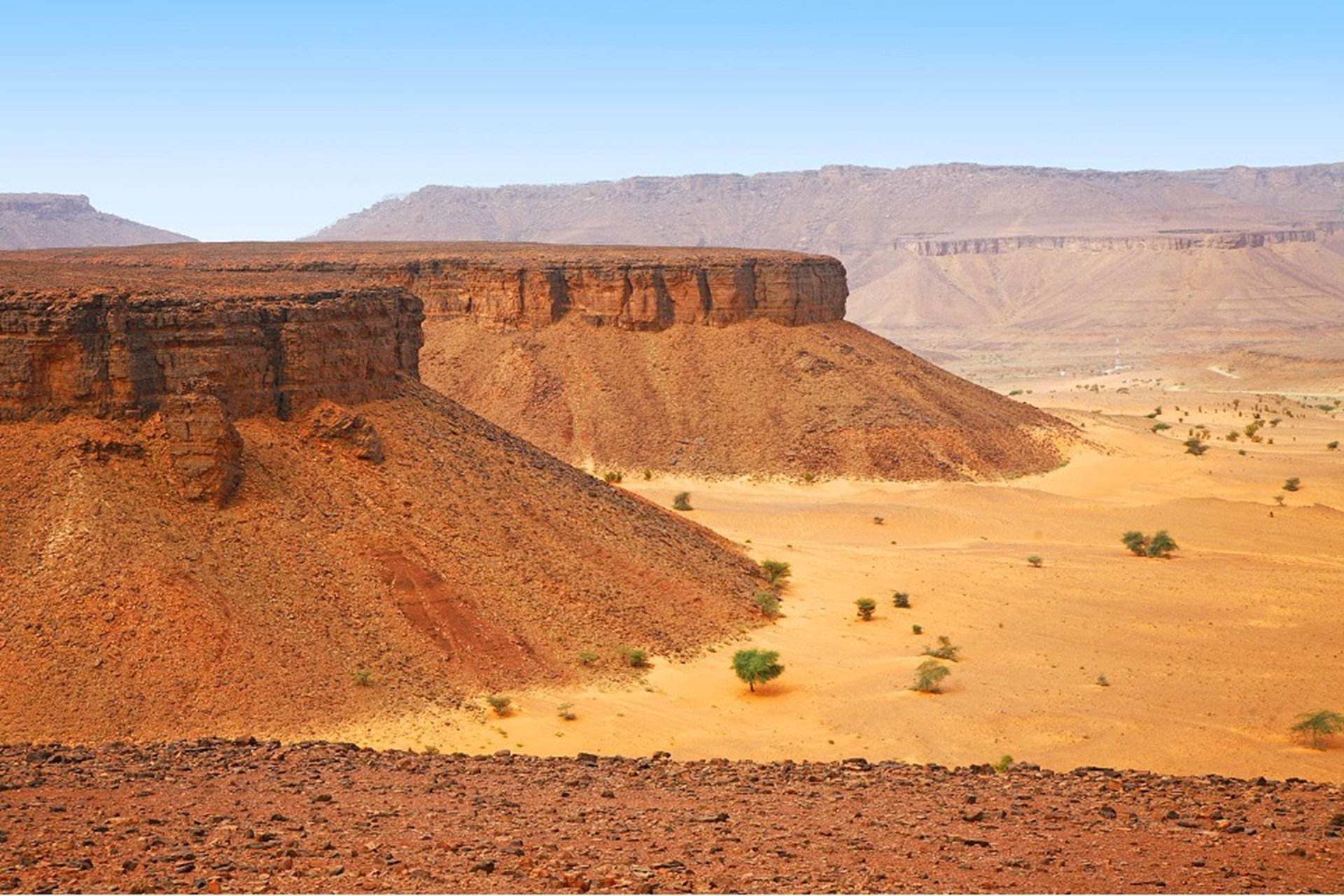
Aoukar rock range is a series of escarpments and creates a spectacular landscape of moon like mountains. The range divides the great Ouarane dunes in the north from the Aoukar depression in the south. We will join an 11th-century caravan route connecting Oualata with the western part of Mauritania to discover Makhrouga, one of the most spectacular rock erosions in the Sahara: nature has sculpted a rocky massif in the shape of elephants. Some graffiti depicting an archaic Berber alphabet (Tifinag) testify to an ancient human presence and same remains of stone walls delimitates wat has been a scared area.
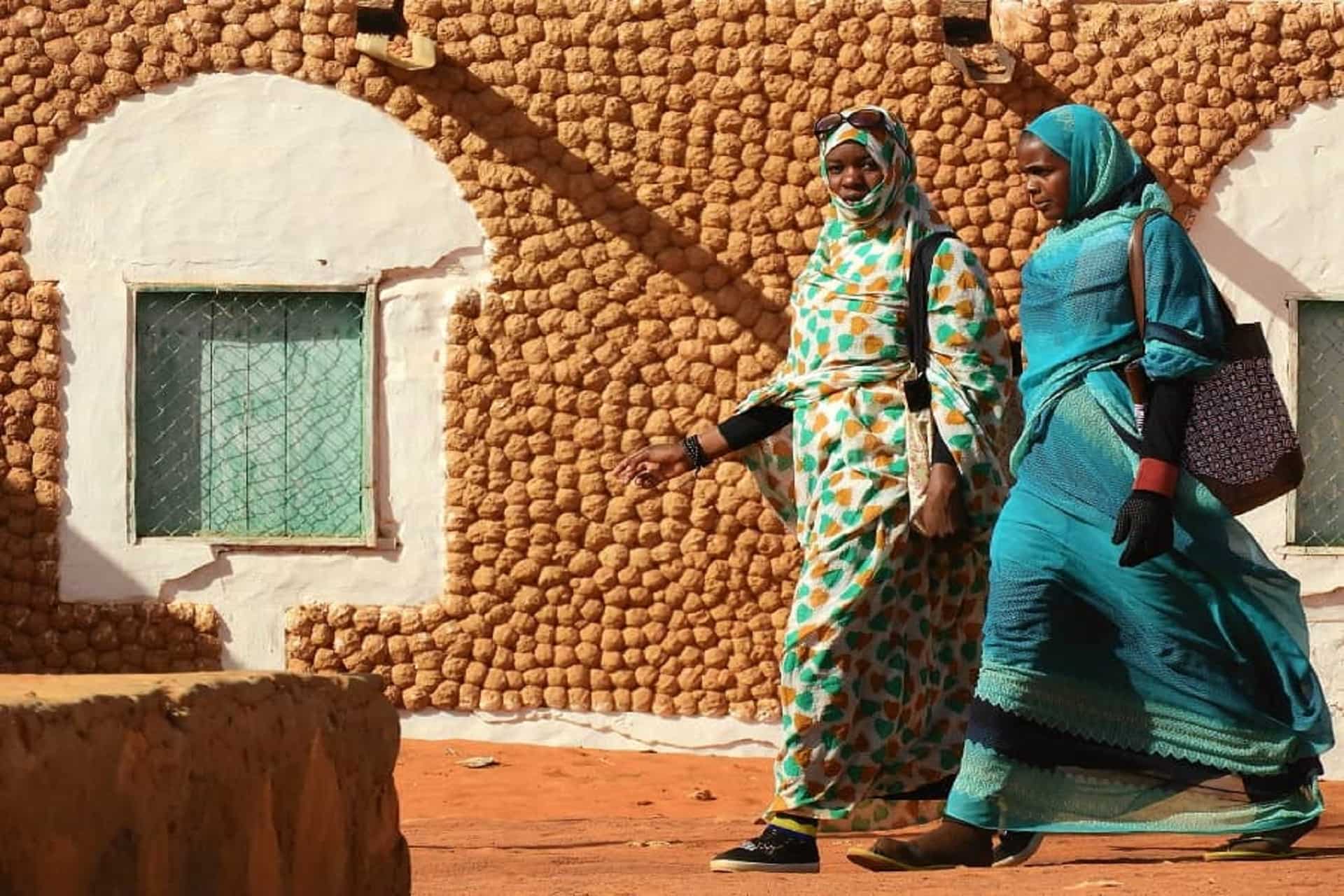
Following the caravan route, we arrive in Oualata, a remote World Heritage Oasis unique for the traditional frescoes that decorate the facades of the adobe houses. The colorful arabesques and symmetric patterns made exclusively by women make Oualata a unique oasis. During this off-the-beaten-track itinerary, we will discover rare rock carvings depicting chariots pulled by horses. In addition to this extreme exploration, we will not miss the classic must-sees of Mauritania: the villages and mountains of Adrar, the stone oases of Chinguetti and Ouadane, and the mysterious Guelb Es Richat, known as the Eye of Africa.
6 Days extension: A UNIQUE ARCHAEOLOGICAL EXPLORATION
Discover Aoudaghost, the northernmost and best-preserved city of the oldest kingdom south of the Sahara: the Ghana Empire, dating back to the 6th century.
We’ll cross the still-undiscovered dune basin of Erg Aoukar to explore, by torchlight, deep caves containing millstones and decorated clay granaries. We’ll then reach two vast archaeological sites that we discovered in a recent scouting: large villages with paved alleys along a millennia-old trade route that connected the desert to Black Africa.
We’ll encounter true living fossils: the rare Desert Crocodiles, which survive the high temperatures of the Sahara thanks to “estivation,” a reverse form of a hibernation.
Arrival in Nouakchott. Transfer and overnight
As resume of Mauritanian history and culture, visit of the interesting National Museum which displays archeology, artifacts, costumes, and textiles from prehistory to the present days. Unique pictures taken during excavations of Aoudaghost, the northern trading town and better conserved site of the legendary Ghana Empire, that we will get in touch with on day 16th. Lunch in a restaurant managed by Ivorian women to taste their specialties. Afternoon driving along the northbound road in the Sahara Desert in a spectacular dune landscape to the mining town of Akjoujt.
Early departure for an intense day visiting the even more scenic landscape of Mauritania: valleys, high mountains, yellow sand with dark brown and red rock peaks, remote adobe villages.
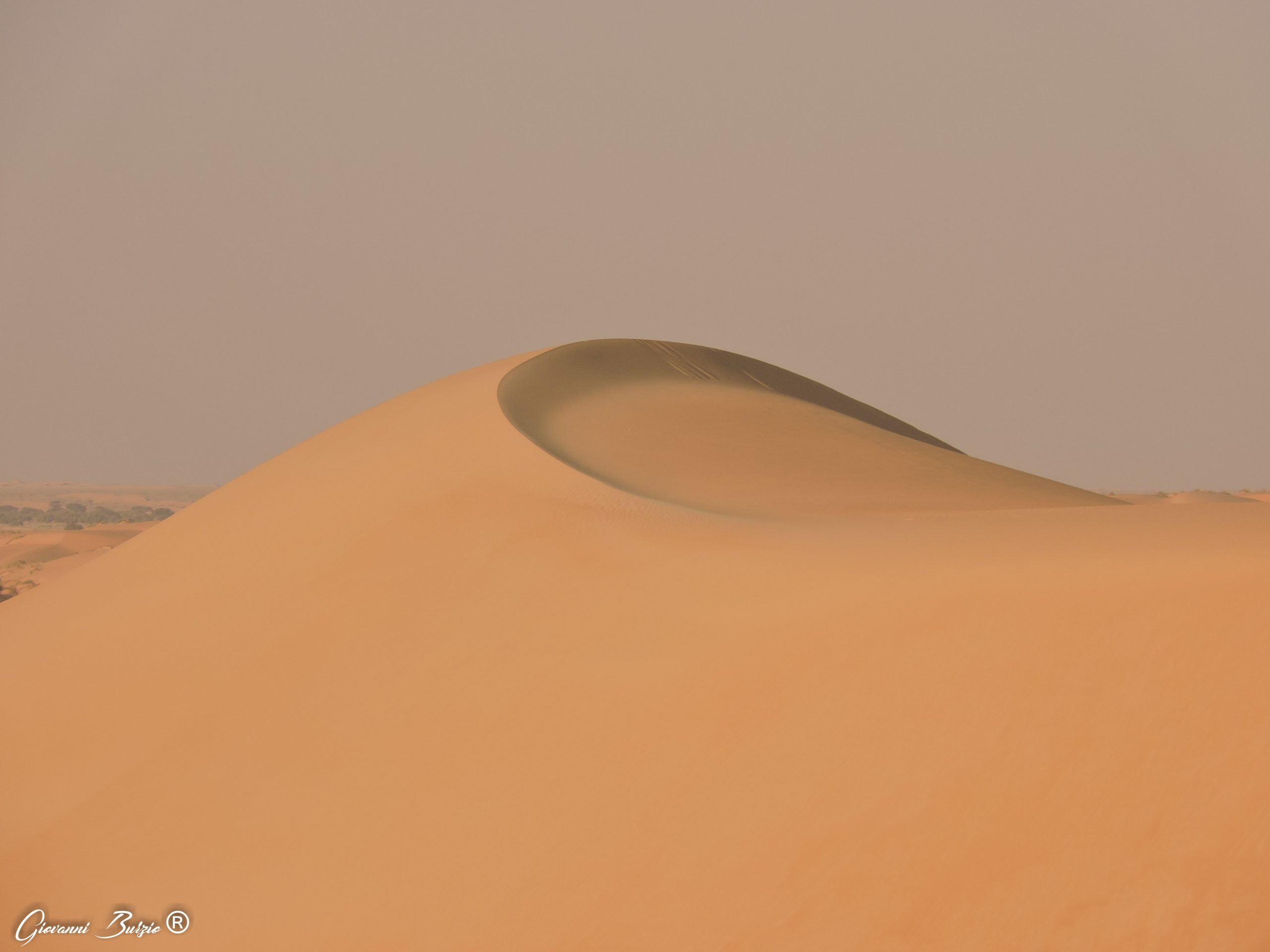
The Amatlich Erg is one of the most beautiful dune chains in the region. We will visit remote nomadic camps, oases and hidden adobe villages finding here and there prehistoric stone arrowheads, a fragment of terracotta: silent testimony of peoples who lived in these sites a long time ago, before desertification).
These human encounters after the immense silence of the Sahara are intense.
Evening arrival in Chinguetti.
Chinguetti is an ancient caravan terminal and an important trading point between North and Black Africa. The stone village, at a cross point of different caravan routes, dates back to the thirteenth century and is reckoned nowadays as the jewel of the Mauritanian oases.
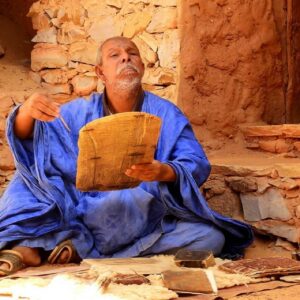
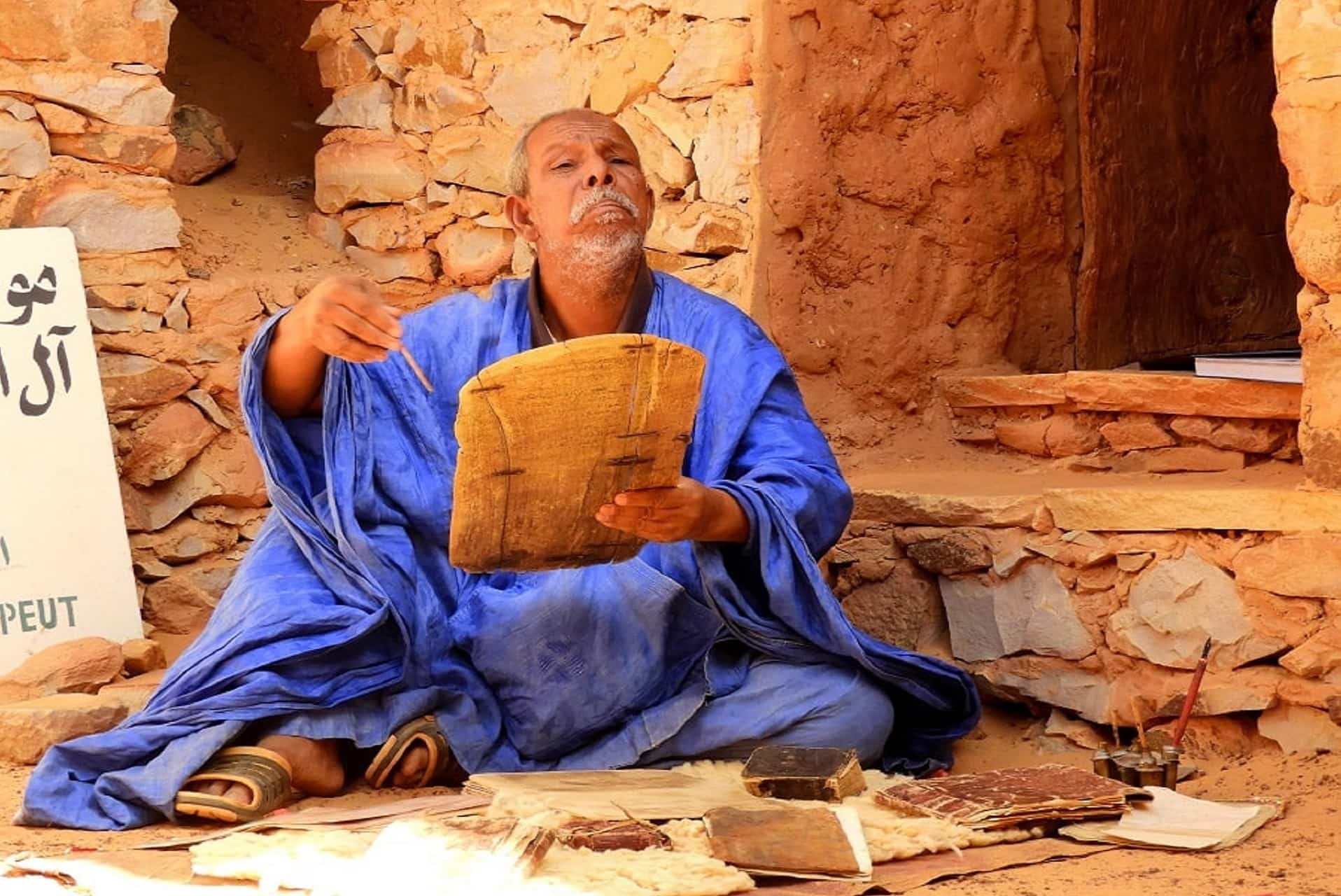
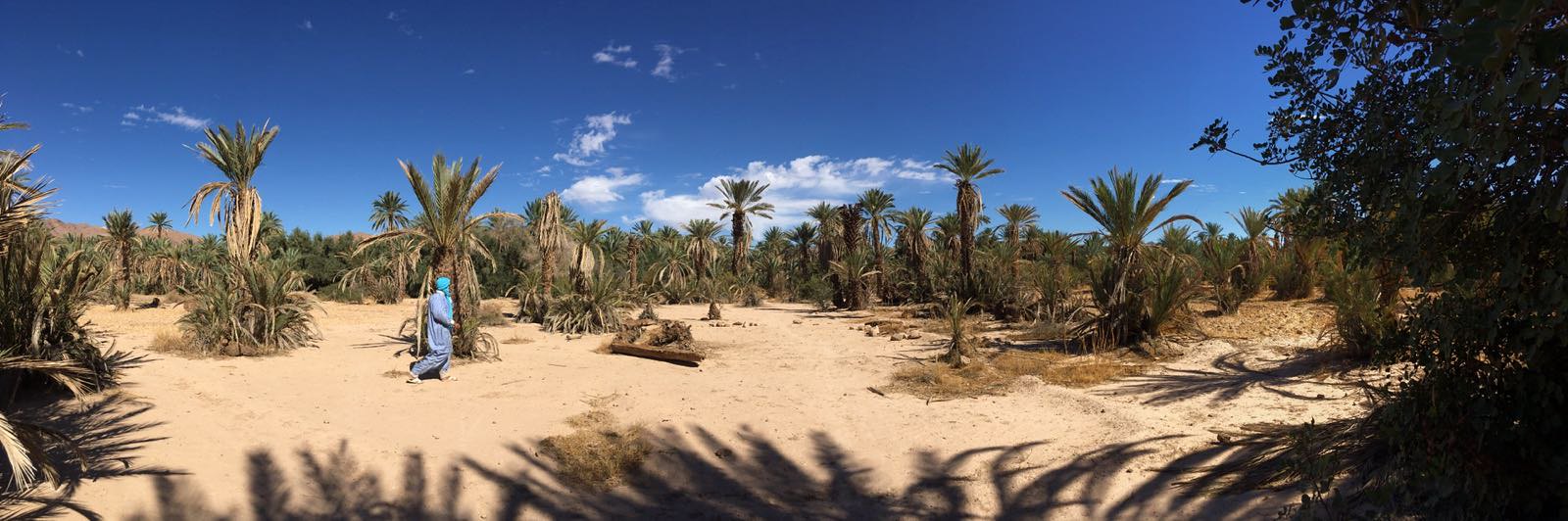
We will spend the whole day in the magical atmosphere of this citadel, discovering among others, palm groves that shade vegetable gardens, a green miracle. In the old stone quarters, we will be invited to visit two ancient manuscript collections, including Ould Habott, the largest one in Mauritania. The white stone mosque considered the second ancient, still operating in the world. As remains of the colonial: the former French Foreign Legion fort and the tribunal building in Neo-Sudanese style.
The day will end on the highest dunes to enjoy the sunset over Chinguetti.
Drive to Ouadane.
Ouadane, founded in 1147 on a rocky hill, is the most remote oasis in Mauritania, an outpost facing the immensity of the desert. Mainly in ruins, some of its stone houses are still inhabited. In ancient times, Ouadane was a caravan trading point between the Maghreb and black Africa. Trade was so flourishing that in 1487 the Portuguese built a fortified trading post in the region.
Guelb er Richat, a geological mystery called by geologists the “Eye of Africa”, is a landmark for astronauts. Three concentric rock rings around an inland hill, the largest ring 40 kilometers (25 ml) in diameter. Geologists have formulated various hypotheses about the origins: the first is that the phenomena were caused by a huge meteorite that fell to earth. The most recent theory believes it is the result of erosion on a large volcanic dome. Overnight stay: camp in the desert.
Off-road itinerary between spectacular rocky ranges with breathtaking views of the desert and possible encounter with remote groups of nomads.
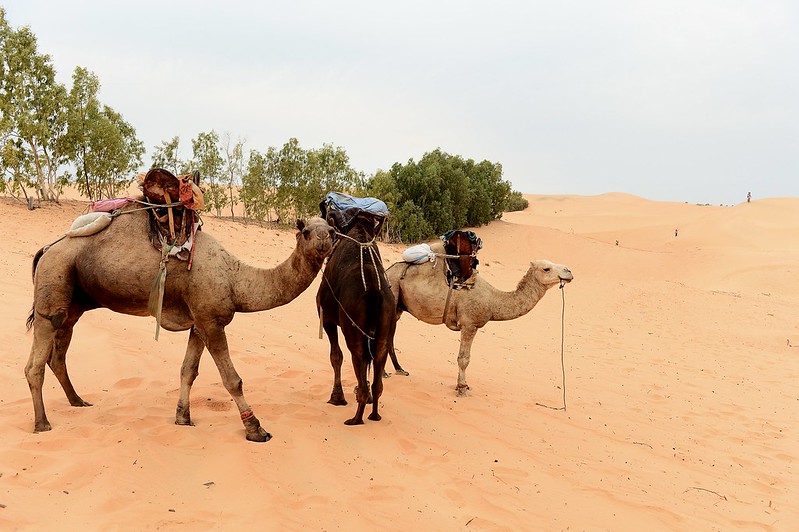
The Trig Chauail Canyon is an impressive sight: flat rock surfaces covered with petroglyphs. The region hides more than 220 panels with 600 different motifs, a real “open-air” retrospective exhibition on the last 6 000 years of rock art in the Sahara: from the time before desertification (showing warriors, horses pulling chariots, livestock and wildlife such as elephants and antelopes) to more recent times (showing camels (dromedaries) that came to the Sahara with the final desertification, some 2000 years ago). Camp at the abandoned fort of El Ghallaouiya, built by the French colonial “camel battalions”, has the typical atmosphere of the foreign legion. Overnight stay: mobile camp.
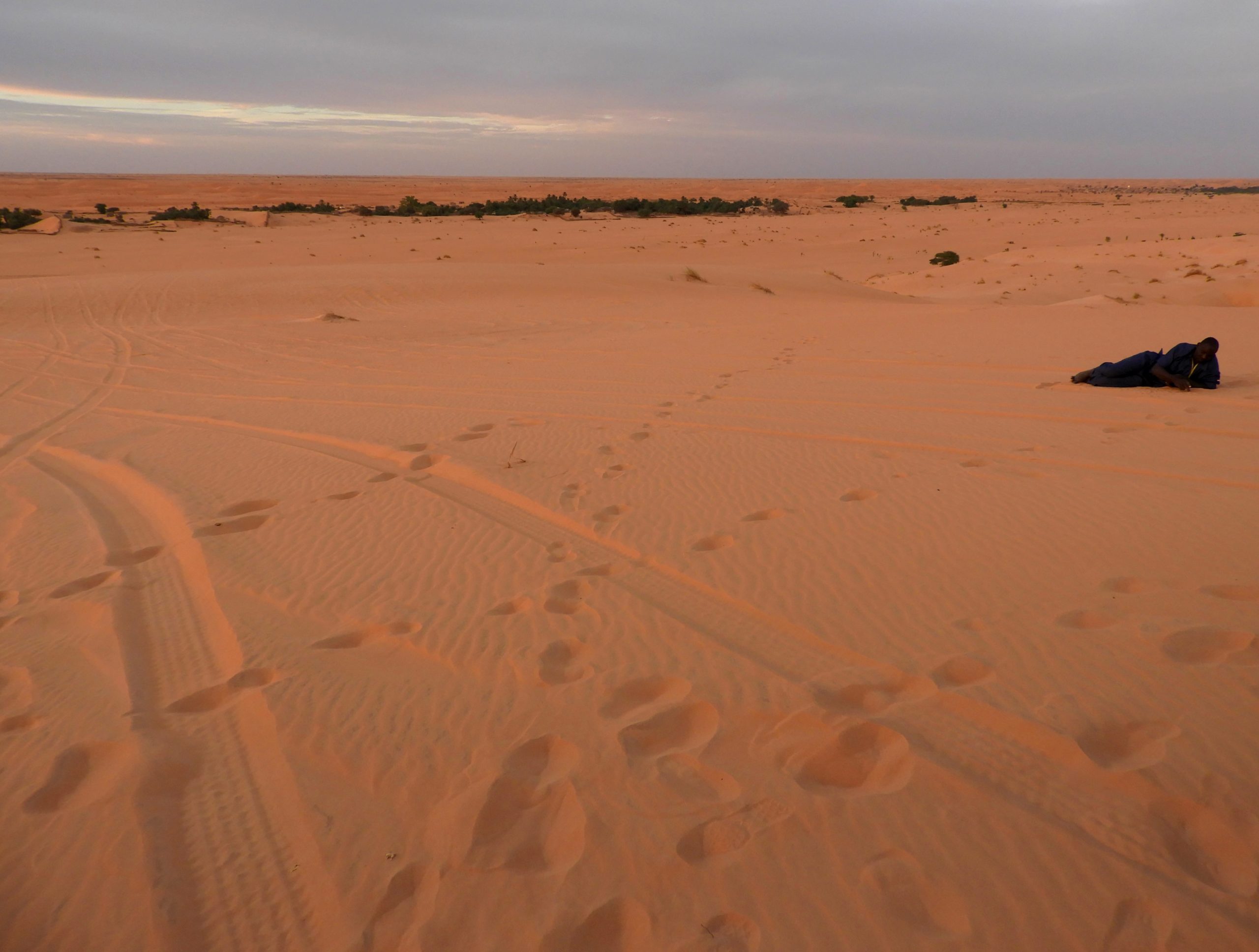
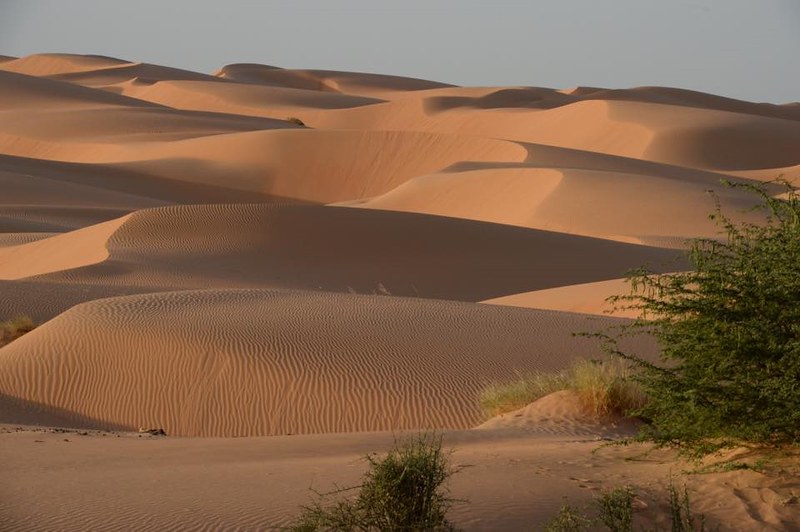
Departure for total emptiness. We will find our way off the beaten track through the immensity of Erg Ouarane: large more than 800 kilometers of continuous dunes and virgin sand on the horizon, a pure Sahara experience.
GPS, compass, local guide and years of experience, will help us navigate through one of the least known parts of the Sahara, the largest desert on Earth, in its most perfect form, as only the imagination can represent.
After three days of total emptiness, the Aoukar mountains and the Makhrouga site will appear, one of the most spectacular rock erosions in the Sahara: nature has carved a rock massif in the shape of elephants. Some graffiti depicting an archaic Berber alphabet (Tifinag) bear witness to an ancient human presence.
Overnight stay: mobile camp in the dunes.
Follow the Aoukar mountain chains is as difficult as spectacular. It was the shore of a large lake, now vanished in the desert, and remains of numerous prehistorical villages are hidden between rocks and sand. In that humid period, the region was highly inhabited. Some experts estimate that in the Neolithic the Aoukar was hosting a population of 400.000 inhabitants, being, at that time, one of the largest inhabited places on earth. Arrive at Oualata, one of the more special oases of the Sahara. If early arrival starts of the visit of this unique oasis.
Oualata is a World Heritage Site and a unique and spectacular oasis dating back to the 11th century. Hidden by rocky hills, it was an important caravan terminal in the Southern Sahara. The traditions of Oualata are still alive.
What makes adobe architecture special are the frescoes that decorate the entrances (and interiors) of the houses.
These frescoes are made exclusively by women who have handed down this technique from mother to daughter for centuries. Women of different ethnic groups in the West African savannah create complex frescoes that often hide symbolic meanings.
The frescoes show the cultural connection between the local Berber female population and the female traditions of Black Africa.
After lunch a track will bring us to Nema and to the hotel.
Morning departure. We’ll reach Ayoun El Atrous and Kiffa before evening, traveling along the only road connecting Mauritania from east to west. This road connects extremely isolated regions to the capital and the Atlantic coast, hence the name “the road of hope.”
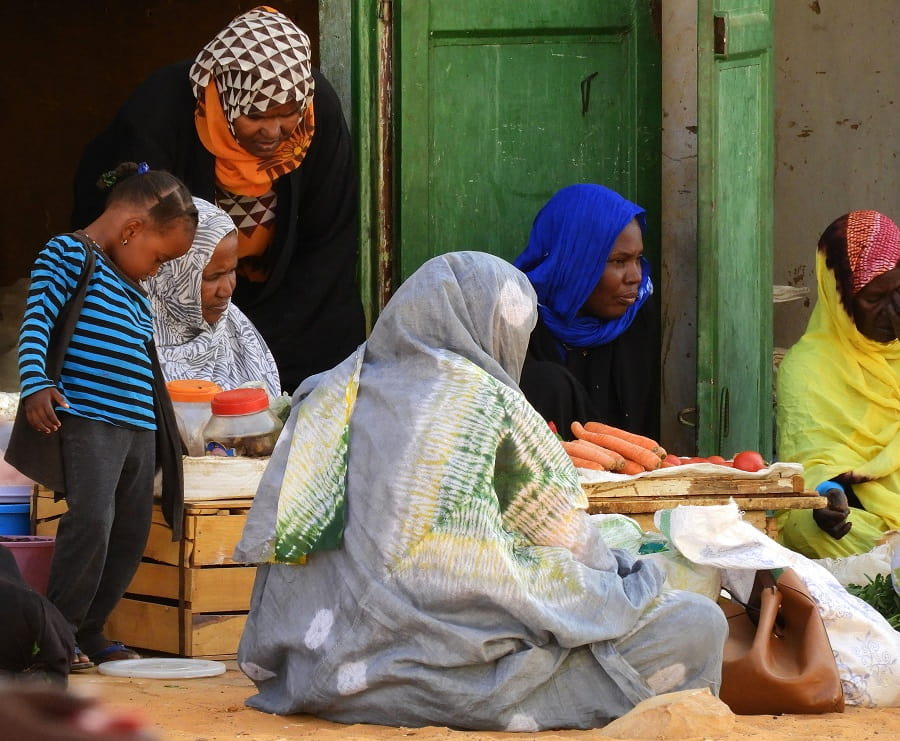
Visit the large Kiffa market, an important trading post between the region’s nomadic populations and the sedentary and rural populations of Black Africa, who came from the savannahs of the southern regions toward the border with Senegal. Kiffa is known for its local production of glass beads (Kiffa beads). The use of glass and stone beads, whether as currency, dowry, or simply as jewelry, is deeply rooted and still practiced among the people of this oasis, considered the main center of exchange for these goods-currency. At the market, we’ll discover traditional Kiffa pearls, as well as ancient Venetian glass beads brought by caravan trade and ancient stone beads.
Morning departure. A day of travel to Nouakchott, which we’ll reach before evening, with a visit to a camel market. Day rooms and transfer to the Airport.
We will follow a road to Ayoun el Atrous. Then, we leave this road and follow a track to the northwest.
One of the highlights of the itinerary is the archaeological site of Aoudaghost with its miles of ruins hidden in the mountains. Aoudaghost is believed to have been the northern trading town of the Ghana Empire, the oldest known empire in black Africa dating back to the 6th century.
Aoudaghost was a wealthy caravan town being gold dust its most famous trade. In ancient Islamic manuscripts it was described as large as Mecca.
Only a few areas of Aoudaghost were studied by archaeologists in the early 60s but today the sand has covered all traces of the few excavations and there we will have the impression of being the first on the sites after a thousand years.
Thanks to the remoteness of the place, these sites are rarely visited. We will discover in the area the mysterious remains of another stone town, Togba, totally unknown.
In this region we explore deep caves, a unique experience: thanks to our flashlight we will discover prehistoric millstones, decorated granaries and more… Mobile camp.
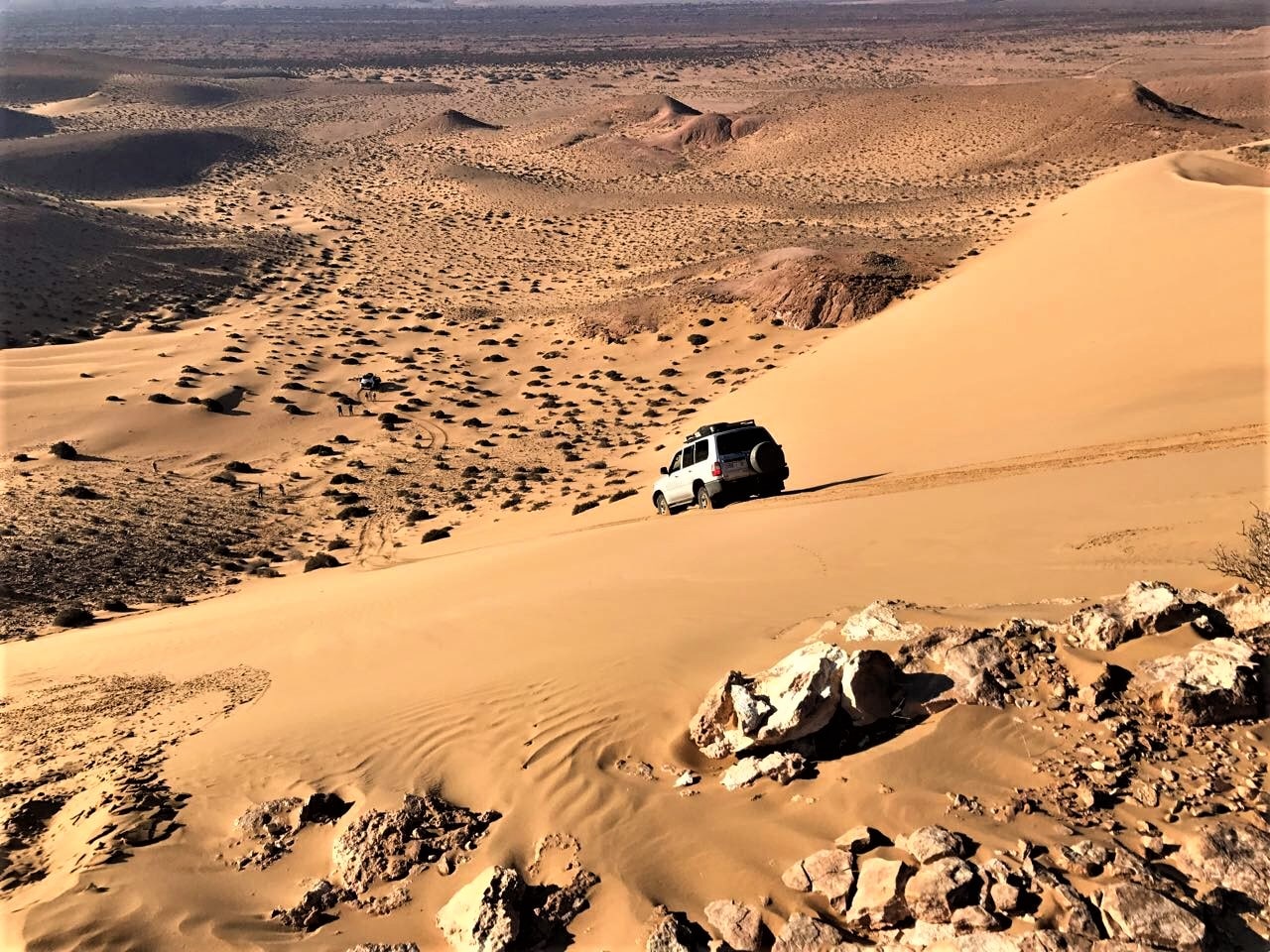
We will explore the western part of the Aoukar basin. The few books existing on Mauritania says that only experienced camel caravanners can venture into these remote regions … We will experience the region by “climbing” with our 4×4 caravan the Foum el Nega (the Pass of Nega) considered the most difficult passage of what was the Paris-Dakar strenuous competition. Mobile camp.
Finding our way between sand and rocks in the Tagant region to join Matmata guelta. In the scarce waters of this guelta we discover “live fossils” that have been able to survive the most dramatic of climatic changes that have transformed a green savannah crossed by rivers into the current Sahara. The rare desert crocodile (Crocodylus Suchus) still survives in the desert of Mauritania and Chad. Crocodylus Suchus lives mainly on fish and had adapted to survive the long dry season of the Sahara thanks to aestivation. Aestivation is similar to hibernation, but not to survive a cold and snowy winter on the contrary to survive the hot and dry long summer season, reducing metabolism and all life activities, falling into a sleep-like state.
In the region we will visit some unexplored archaeological sites with remains of large fortified stone citadels that includes market squares, chief palace and dozens of small stone towers.
We join the paved road, known as “la route de l’espoir” (the road of hope), which connects southwestern Mauritania with the capital and the Atlantic coast. Stop for lunch at a local restaurant, visit the market and arrive at Butilimit.
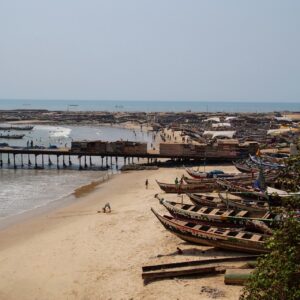
Scheduled arrival in Nouakchott in the late morning. Market, artisans and the colorful fishermen’s port. Day rooms available. Transfer to the airport.
EXPLORATORY ITINERARY: This travel program is an exploratory expedition. The itinerary is designed to experience fascinating places where foreigners don’t or hardly arrive. Scheduled itinerary, visits, are given as an indication and could be changed at the solo decision of the expedition leader. Wind, visibility, ground conditions, local authorities’ decisions, events of major force, technical, mechanical or other unexpected events may delay or change our schedule. TransAfrica can’t be considered liable for any changes and delays.
Participants must be flexible to full experience unique encounters, discoveries, and astonishing landscapes as much as some unexpected situations that are part of the “African experience”.
TRANSPORTS: 4WD, recent vehicles plus a logistic pick-up where needed.
MEDICAL and VACCINATIONS: Malaria prophylaxis: recommended for the first and last part of the itinerary (From Nouakchott to Chinguetti and from Oualata to Nouakchott).
VISA: online application: https://anrpts.gov.mr/visa/requestvisa
MEALS: Lunches: cold meals, mainly picnics or at local restaurants (pre-selected menus).
Dinners: at the hotels (pre-selected menus).
At our mobile camps: simple but tasty hot dinners composed by fresh local products integrated by preserved food. Bottled mineral water included.
Please mention any diet prescription at the time of booking.
CAMPS: Camp in the immensity of Sahara is an unforgettable experience. Igloo tents fitted for tropical climate; camping mattress included. Nights in the Sahara can be cold and windy. Please, bring your own sleeping-bag or it is also possible to buy, at the arrival, a large and comfortable blanket that fit with the desert conditions.
LUGGAGE: Due to the nature of the itinerary, please limit your personal luggage to 45lb (20 kg), soft sacs are recommended.
INSURANCE: Mandatory for medical assistance (health care), repatriation, physical and material damages. TransAfrica will not be held responsible for any material and physical damages during or in consequence of the tour. Discover an insurance policy proposal: https://transafrica.biz/en/travel-insurance-en/.
Prices include:
Prices do not include:
Fill out the form below to request information. We usually respond within 48 hours.


“A review from a customer who benefited from your product. Reviews can be a highly effective way of establishing credibility and increasing your company's reputation.”
Customer Name
“A review from a customer who benefited from your product. Reviews can be a highly effective way of establishing credibility and increasing your company's reputation.”
Customer Name